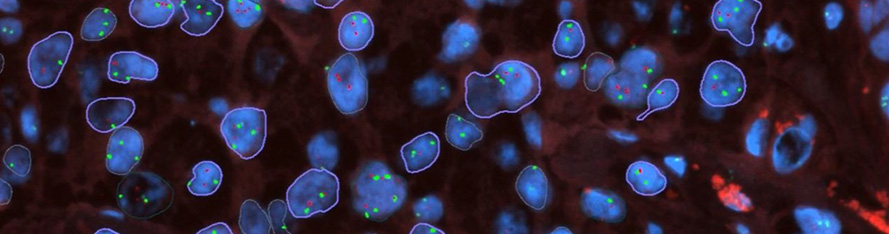
Molecular cytogenetics is an area of genetic testing that uses advanced technologies to evaluate genetic changes too small to be detected under a microscope by conventional methods. Rather than focusing on the overall appearance of chromosomes, it examines specific regional changes within the DNA sequences that make up genes.
These structural changes may be too subtle for conventional analysis but can be directly associated with various genetic syndromes, unexplained developmental delay and certain cancers. Molecular cytogenetic analyses detect these hidden rearrangements with high sensitivity.
What Do Molecular Cytogenetic Tests Evaluate?
Molecular cytogenetic analyses examine:
1
Very small DNA losses (microdeletions) or gains (microduplications) that cannot be seen using conventional microscopy
2
Abnormalities and rearrangements in targeted DNA regions associated with specific genetic disorders
in detail.
Advanced molecular technologies such as FISH and chromosomal microarray allow genetic material to be assessed at very high resolution. Specialists interpret the detailed findings together with the relevant clinical information.
When AreMolecularCytogeneticTestsUsed?
when a genetic condition is still suspected despite normal conventional cytogenetic results;
in unexplained intellectual disability and autism spectrum disorders;
for definitive diagnosis of specific microdeletion and microduplication syndromes;
to determine the genetic subtype of cancer and support targeted treatment planning;
for detailed investigation of infants and children with congenital anomalies of unknown cause, including multiple-organ involvement.
These tests make an important contribution to diagnosing genetic diseases, identifying potential risks and developing appropriate follow-up and treatment plans.