Advances in molecular genetics now allow the causes of many inherited and rare diseases to be investigated in far greater detail.
Whole exome sequencing (WES) and whole genome sequencing (WGS) are next-generation sequencing (NGS) methods that enable comprehensive analysis of an individual's genetic makeup. These tests make a particularly valuable contribution to diagnosis when the cause of a condition remains unexplained.
At GENAY Genetic Diseases Assessment Center, we provide WES and WGS analysis in accordance with international standards and clinical requirements.
Whole Exome Sequencing (WES)
Detailed analysis of the genomic regions most commonly associated with disease
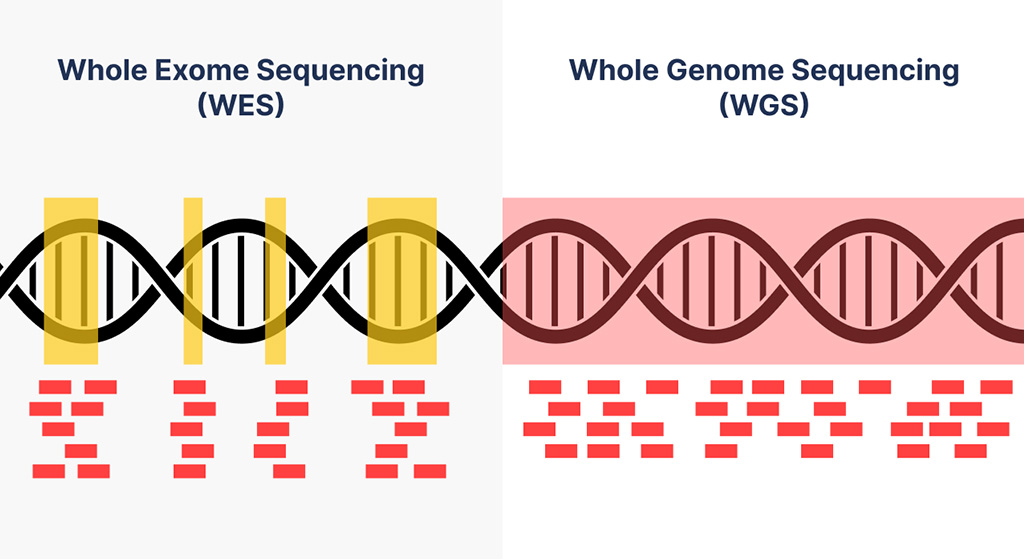
The human genome contains approximately 20,000 genes. The protein-coding parts of these genes are called exons, and together they make up the exome.
Whole exome sequencing analyzes these regions, which are most commonly associated with disease. Because a large proportion of genetic disorders are caused by changes in the exome, WES is a powerful diagnostic method.
WES can detect:
1
2
3
4
.
When IsWESPreferred?
When it is unclear whether a single gene is responsible, examining genes one by one can be time-consuming. WES analyzes thousands of genes simultaneously and can accelerate the diagnostic process.
WES is frequently selected for:
developmental delay and autism spectrum disorders
epilepsy and neurological disorders
cardiac conditions
metabolic disorders
immunodeficiencies
muscle and connective-tissue disorders
fertility problems and recurrent IVF failure
.
What IsTrio WES?
In trio WES, the patient's genetic findings are evaluated together with those of both parents.
This approach:
increases the diagnostic yield.
facilitates detection of newly arising (de novo) genetic variants.
helps determine the mode of inheritance more accurately.
In suitable cases, trio analysis can substantially increase the likelihood of reaching a diagnosis.
WholeGenomeSequencing(WGS)
Analysis of the complete genetic makeup
Whole genome sequencing analyzes an individual's complete genetic information, comprising approximately three billion base pairs. WGS covers not only the protein-coding regions of genes but also regions involved in regulating and controlling gene activity.
Evaluates the entire genome.
Detects structural genetic changes more comprehensively.
Analyzes variants outside exons.
Can analyze mitochondrial DNA.
WGS is therefore one of the most comprehensive genetic analysis methods and can improve diagnostic yield, particularly in complex or unexplained cases.